The Witcher 3: Wild Hunt Review
Years on, no open world has matched the writing of CD Projekt Red's monster-hunting epic. Its side quests shame most games' main stories.
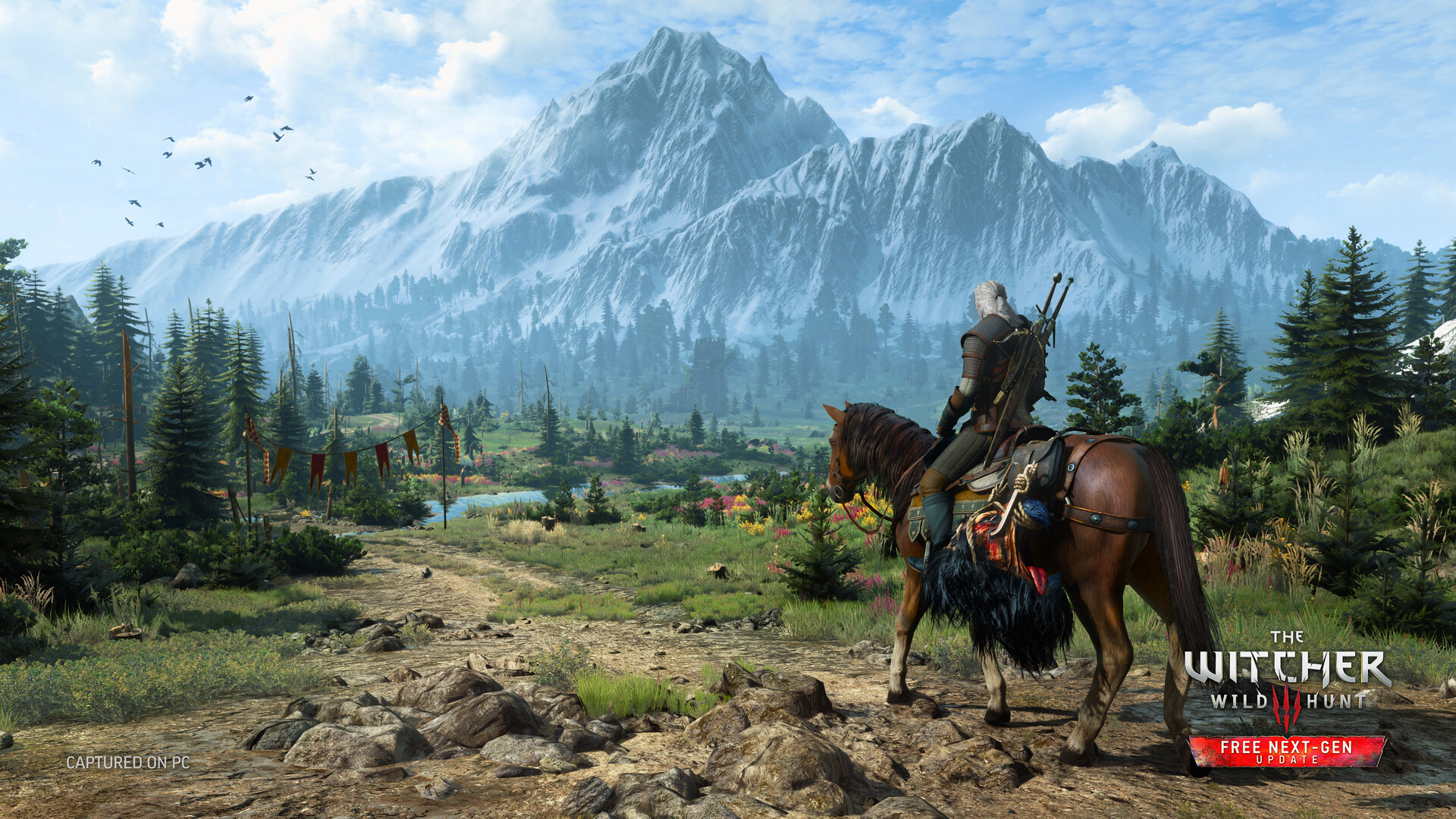
Some games age into curiosities. The Witcher 3 has aged into a classic. A free next-gen update sharpened its visuals, but the reason it endures is the writing — still, years later, the best in any open world.
The side quest as art form
Most open worlds pad their maps with fetch quests. The Witcher 3 gives you a missing-husband case that becomes a meditation on grief, or a haunted orchard that turns into folk horror. There is almost no filler here; even a contract on a wraith carries a small, complete human story. It quietly rewired what players expect from optional content.
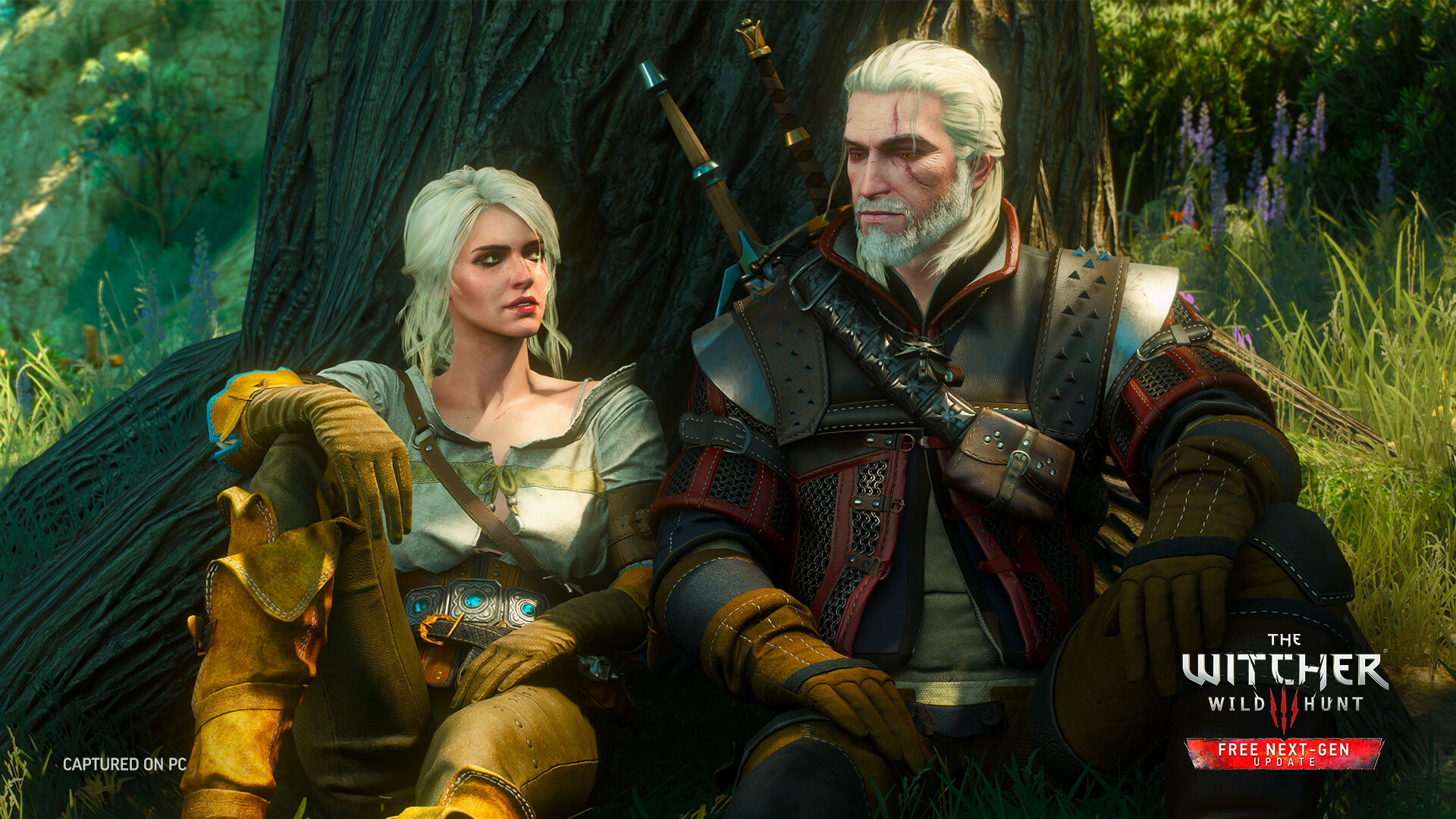
The main thread is just as strong. You play Geralt of Rivia, a monster slayer for hire, searching for his adopted daughter Ciri, who is on the run from the otherworldly riders of the Wild Hunt. Adapted from Andrzej Sapkowski's novels and steeped in Slavic folklore, the story treats that search as a family drama first and a fantasy epic second. Your choices at key moments steer it towards one of three endings, and the best of them feel earned rather than selected from a menu.
A world that feels lived-in
Velen's mud-soaked villages, the canals of Novigrad, the windswept isles of Skellige — each region has its own palette, politics and problems. Geralt moves through it as a wonderfully grounded protagonist: gruff, decent, and far more nuanced than the stoic-mercenary archetype suggests.
What sells the place is how much it reacts to time and circumstance. A day-night cycle changes which monsters are abroad, a werewolf is at its most dangerous under a full moon, and the price of goods shifts with each region's local economy. Between contracts you can race horses, box in back rooms or lose an evening to Gwent, the card game that proved popular enough to become a standalone release. Marcin Przybyłowicz's folk-tinged score, performed by the Brandenburg State Orchestra, ties it all together.
Swords, signs and preparation
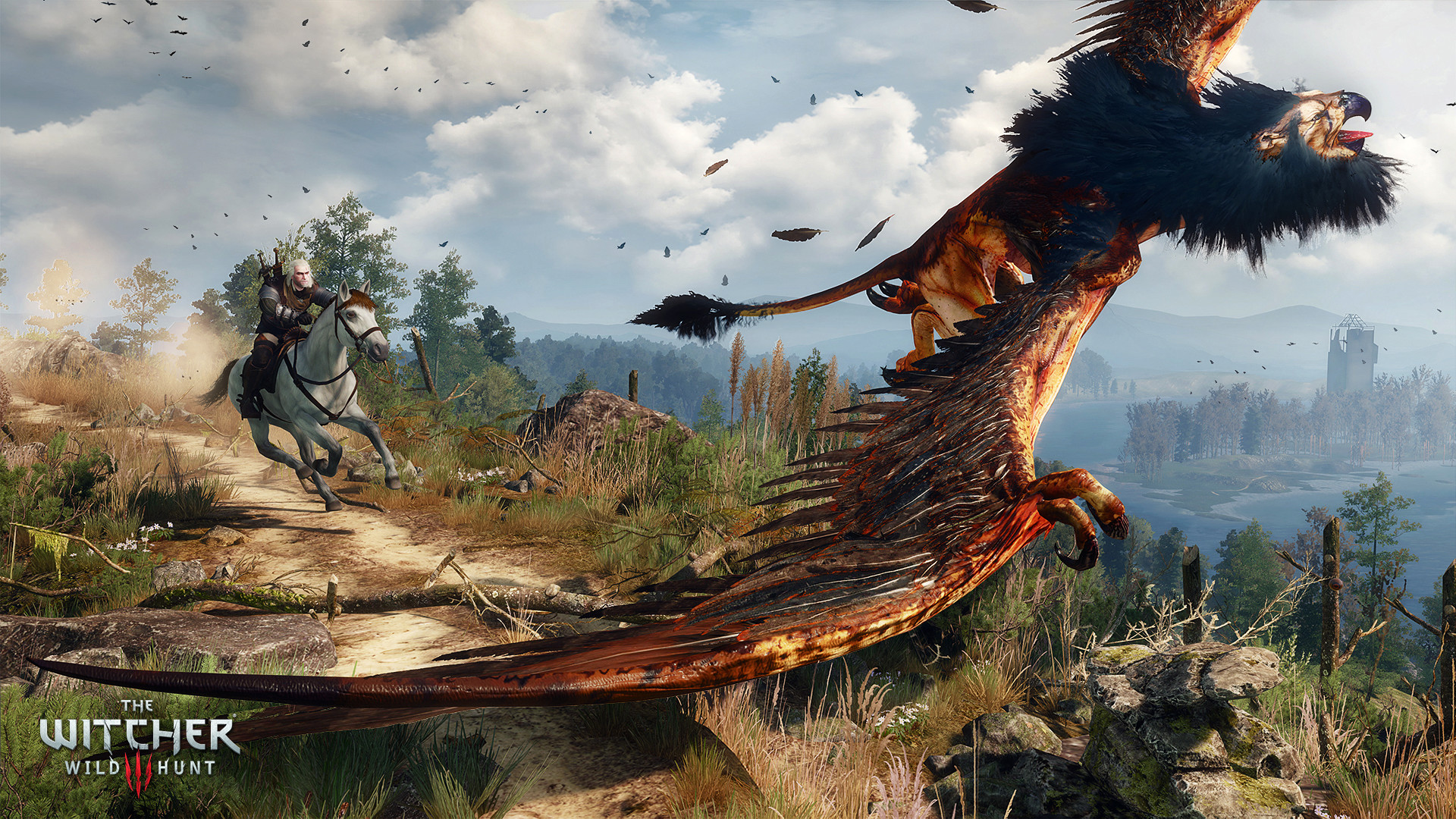
Combat is the part of the game that has aged least gracefully. Geralt carries a steel sword for humans and a silver one for monsters, mixes fast and heavy attacks with dodges and counters, and backs it all up with five magical signs: Aard's telekinetic blast, Axii's confusion, Igni's flames, Yrden's slowing trap and Quen's protective shield. It works, but the rhythm is floaty and the camera struggles in tight spaces.
The saving grace is preparation. Reading the bestiary, brewing the right potion, oiling a blade and choosing the right sign turns a scrappy brawl into a hunt with a plan, which is exactly how a witcher should think. Four skill trees covering combat, signs, alchemy and general abilities give you room to specialise, even if the menus that manage it all still creak.
Two expansions that raised the bar
Hearts of Stone, released in October 2015, brings Geralt face to face with the mysterious Man of Glass and the immortal Olgierd von Everec, and it contains some of the tightest writing in the series. Blood and Wine followed in May 2016, sending Geralt to Toussaint, a Nilfgaardian duchy untouched by war, to track down a beast terrorising the region; it won Best RPG at The Game Awards 2016. Alongside them came 16 free DLC packs, including New Game Plus. Together they turn an already enormous game into one of the most generous packages in the genre.
From next-gen update to Remastered
The game launched on PC, PlayStation 4 and Xbox One in May 2015 and reached Nintendo Switch in October 2019. On December 14, 2022, the Complete Edition arrived on PlayStation 5 and Xbox Series X|S, doubling as a free next-gen update for existing owners with ray tracing, higher-resolution textures and a new quest and outfits inspired by the Netflix series. It shipped with performance problems that CD Projekt Red worked to fix afterwards.
Now it is getting another overhaul. At gamescom on August 25, 2026, CD Projekt Red announced The Witcher 3: Wild Hunt – Remastered, a free upgrade for owners launching September 29, 2026 on PC, PlayStation 5, Xbox Series X|S and, natively, Nintendo Switch 2. It promises upgraded visuals, enhanced combat, improved traversal and mount handling, a revamped skill tree, transmogrification and an expanded photo mode, and existing owners of the base game also get both expansions for free. A new expansion, Songs of the Past, is due in 2027. If the combat rework lands, it addresses the one real weakness noted above; either way, the full history is laid out on Wikipedia.
Are your swords oiled up and sharpened? Potions brewed? Roach saddled? It’s time to face Eredin and his entourage once again! The Witcher 3: Wild Hunt – Remastered features an array of improvements, bringing upgrades to visuals, gameplay, and more. It's coming on September 29
— The Witcher (@thewitcher) August 25, 2026
Official resources
- The Witcher 3: Wild Hunt official website
- Official announcement: The Witcher 3: Wild Hunt – Remastered
- CD PROJEKT newsroom: Remastered and Songs of the Past
- The Witcher 3: Wild Hunt on Steam
- The Witcher 3: Wild Hunt on GOG
- The Witcher 3: Wild Hunt on Wikipedia
The verdict
Combat is functional rather than thrilling and the menus creak, but nothing else here holds back a landmark RPG. Alongside Baldur's Gate 3, it is the first game I recommend to anyone who wants to know what the genre can do.
What we loved
- Side quests with the depth of full storylines
- Geralt is a career-best protagonist
- Gorgeous, distinct regions
- Two expansions that rival the base game
What held it back
- Combat is merely good, not great
- Inventory management is fiddly
- Shows its age in minor animation seams