Sekiro: Shadows Die Twice Review
FromSoftware swaps stats for skill. Sekiro's posture-based combat is the most satisfying — and demanding — the studio has made.
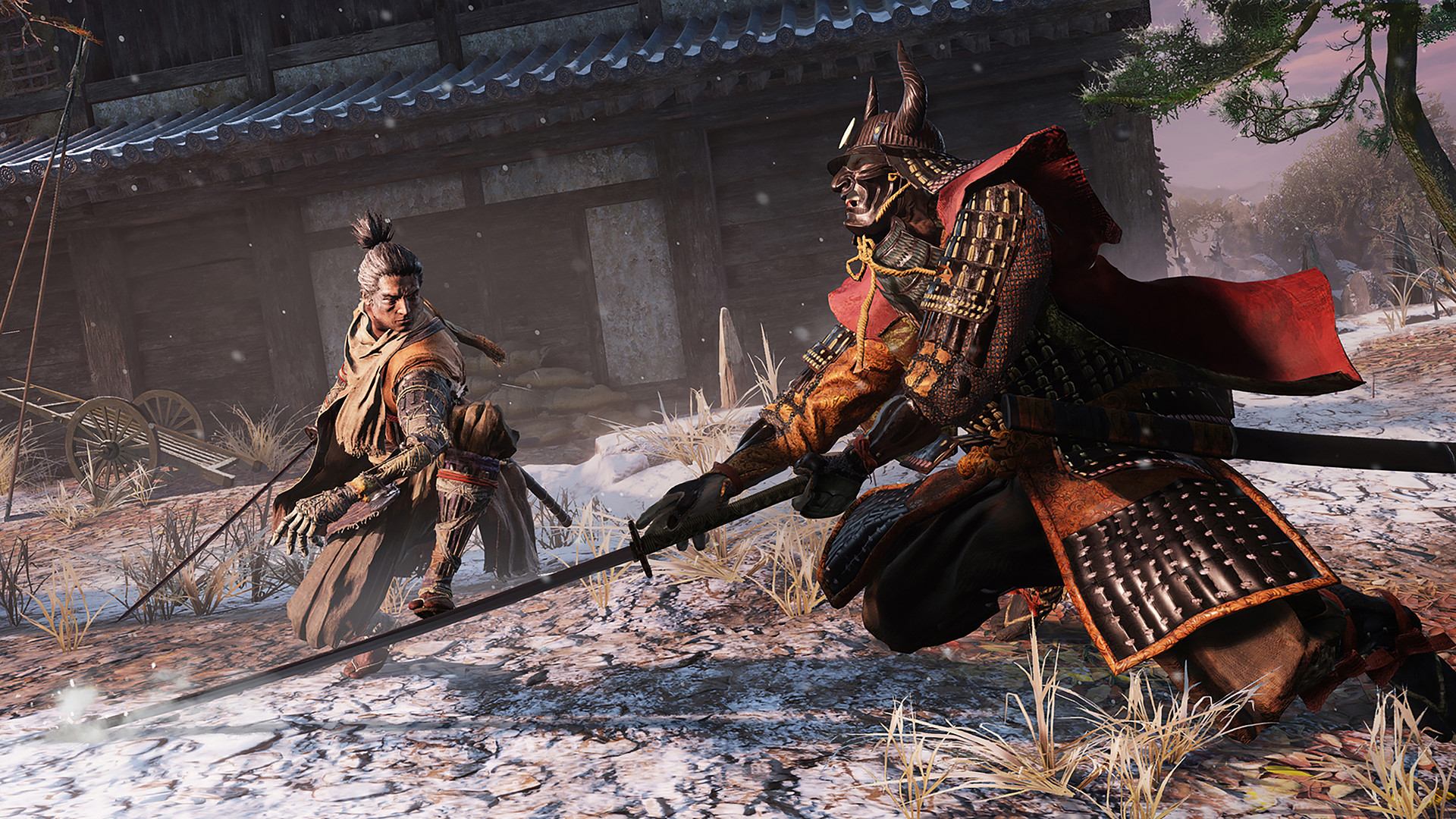
Where most FromSoftware games let you grind or summon your way past a wall, Sekiro: Shadows Die Twice simply demands you get better. It is the studio's purest test of skill, and when it clicks, nothing feels like it.
Released in March 2019 for PlayStation 4, Xbox One and PC, and published by Activision outside Japan, it was directed by Hidetaka Miyazaki as a deliberate break from the Dark Souls template. Out go character creation, stat builds and online invasions. In comes a single, fixed hero, a katana, a prosthetic arm and a combat system that rewards nerve over numbers.
A shinobi with one arm and one master
You play Wolf, a shinobi sworn to protect Kuro, a young lord whose bloodline carries the Dragon's Heritage, a gift of immortality that everyone in the land of Ashina wants to exploit. The game opens with Wolf losing both his lord and his left arm to Genichiro Ashina, and it wastes little time on sentiment after that. A reclusive Sculptor fits him with a shinobi prosthetic, and the hunt to get Kuro back begins.
The setting is a fictionalised Japan in the dying years of the Sengoku period, steeped in Buddhist imagery and folklore rather than real history. As the game's development history notes, no historical people or places appear. Storytelling is more direct than in the Souls games, built around a defined hero rather than a custom avatar, but the richest lore still hides in item descriptions and overheard conversations, and the several endings reward players who dig.
Combat as conversation
Forget dodging and chipping away at health bars. Sekiro is about posture: deflect an enemy's strikes in rhythm and you break their guard for a lethal blow. Fights become tense, percussive duels where hesitation is death and confidence is rewarded. The clang of a perfect deflection is one of gaming's great sounds.
Around that core sits a surprisingly deep toolkit. The prosthetic arm houses an arsenal of shinobi tools, and each one answers a different problem, so reading an enemy means choosing the right tool as much as the right timing. Stealth deathblows let you thin out a courtyard before the real fight starts. And the resurrection mechanic, which lets you rise on the spot after death if you have the power stored, turns a botched encounter into a second chance rather than a long walk back.
No safety net
There are no easier builds to fall back on, no co-op summons. That purity is the point, but it also makes Sekiro the studio's most divisive game. The difficulty is a wall, and not everyone will want to climb it.
What progression exists is narrow by design. A skill tree adds combat arts and special abilities, and gear and prosthetic tools can be upgraded, but there are no stats to pour points into and nothing lets you out-level a boss. The upside of an entirely single-player game is a proper, full pause button. The downside is that when Lady Butterfly or the Guardian Ape has your number, the only way through is to learn the fight until your hands know it.
Ashina from above
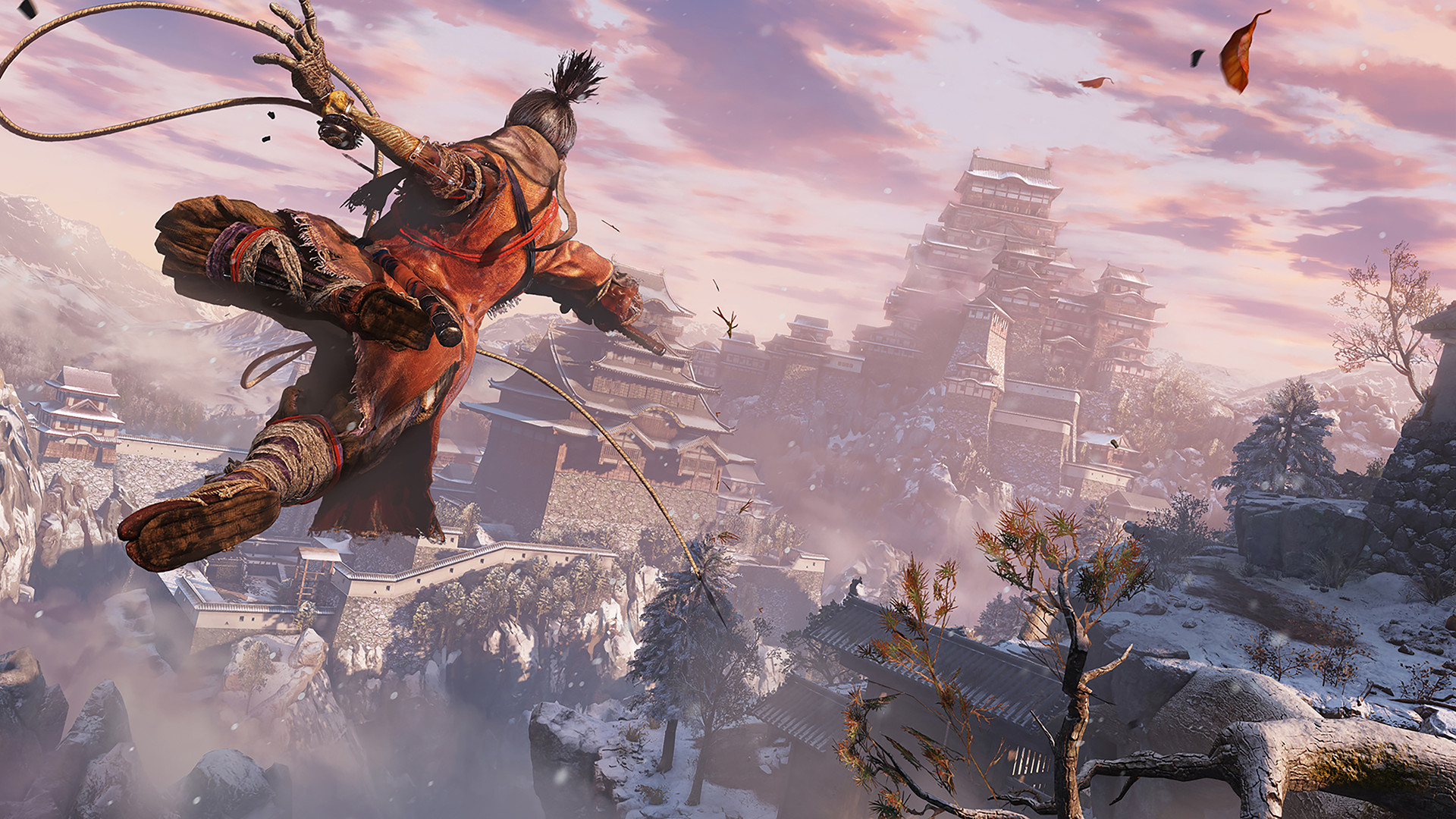
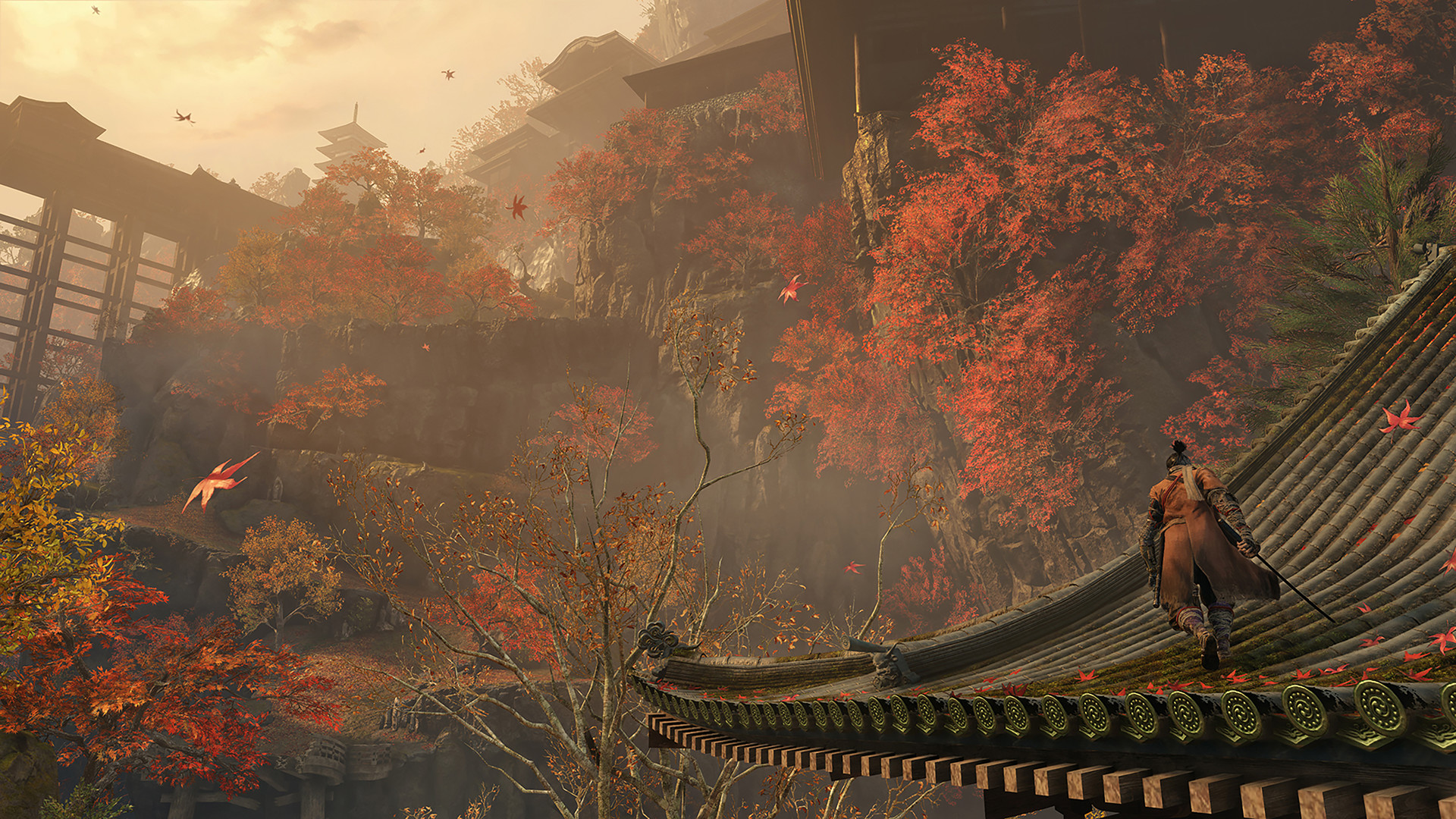
The grappling hook and a dedicated jump button change how FromSoftware builds levels. Instead of trudging down corridors, you vault between branches and rooftops, scout patrol routes from above and pick your moment to drop in. Ashina is made of large, separate zones rather than one seamlessly connected world, but each is dense with secrets and branching paths tucked just off the critical route.
It is a gorgeous place to get lost in, too. Snowbound castle walls, autumn-red temple grounds and, late on, a castle in flames give the journey a distinct mood from area to area, and the art direction does a lot of work in making repeated deaths feel like part of a journey rather than a chore.
What's changed since launch
Sekiro won Game of the Year at The Game Awards 2019, and FromSoftware marked the moment with a characteristically modest thank-you to players.
Sekiro has won Game Of The Year at The Game Awards. Our heartfelt thanks go out to our players. We will endeavour to create games that provide fresh, meaningful experiences, and we sincerely hope you’ll look forward to what’s in store.
— FROMSOFTWARE (@fromsoftware_pr) December 13, 2019
The bigger change for players came on October 28, 2020, when a free update arrived alongside the Game of the Year Edition. As Activision's update post details, any Sculptor's Idol can now be used to rematch defeated bosses in Reflection of Strength or take on a single-life boss rush in Gauntlet of Strength, where Genichiro, Owl and Isshin return with altered attack patterns. The update also added three unlockable outfits and Remnants, a feature for recording and rating feats of skill left by other players. It is not an easy mode, but it is the closest Sekiro gets to community help, and it gives veterans a reason to go back.
Official resources
- Sekiro: Shadows Die Twice official website
- FromSoftware official site
- Game of the Year free update notes (Activision)
- Sekiro: Shadows Die Twice GOTY Edition on Steam
- Sekiro on PlayStation
- Sekiro: Shadows Die Twice on Wikipedia
The verdict
If you crave mechanical mastery, nothing is more rewarding. Sekiro is a ruthless teacher that refuses to lower its standards, and the moment a boss you have died to thirty times finally falls is as pure a high as games offer. If you found Elden Ring tough, know that Sekiro asks even more, and gives back just as much.
What we loved
- Posture and deflection combat is sublime
- Vertical traversal with the grappling hook
- Stunning Sengoku-era Japan
- Every boss is a skill check you'll never forget
What held it back
- Brutal, near-unforgiving difficulty
- Few build options for stuck players
- Difficulty wall will lose some players entirely