Red Dead Redemption 2 Review
Rockstar's western is less a game you beat than a world you inhabit — the most detailed open world ever built, and one of the best-told stories in the medium.
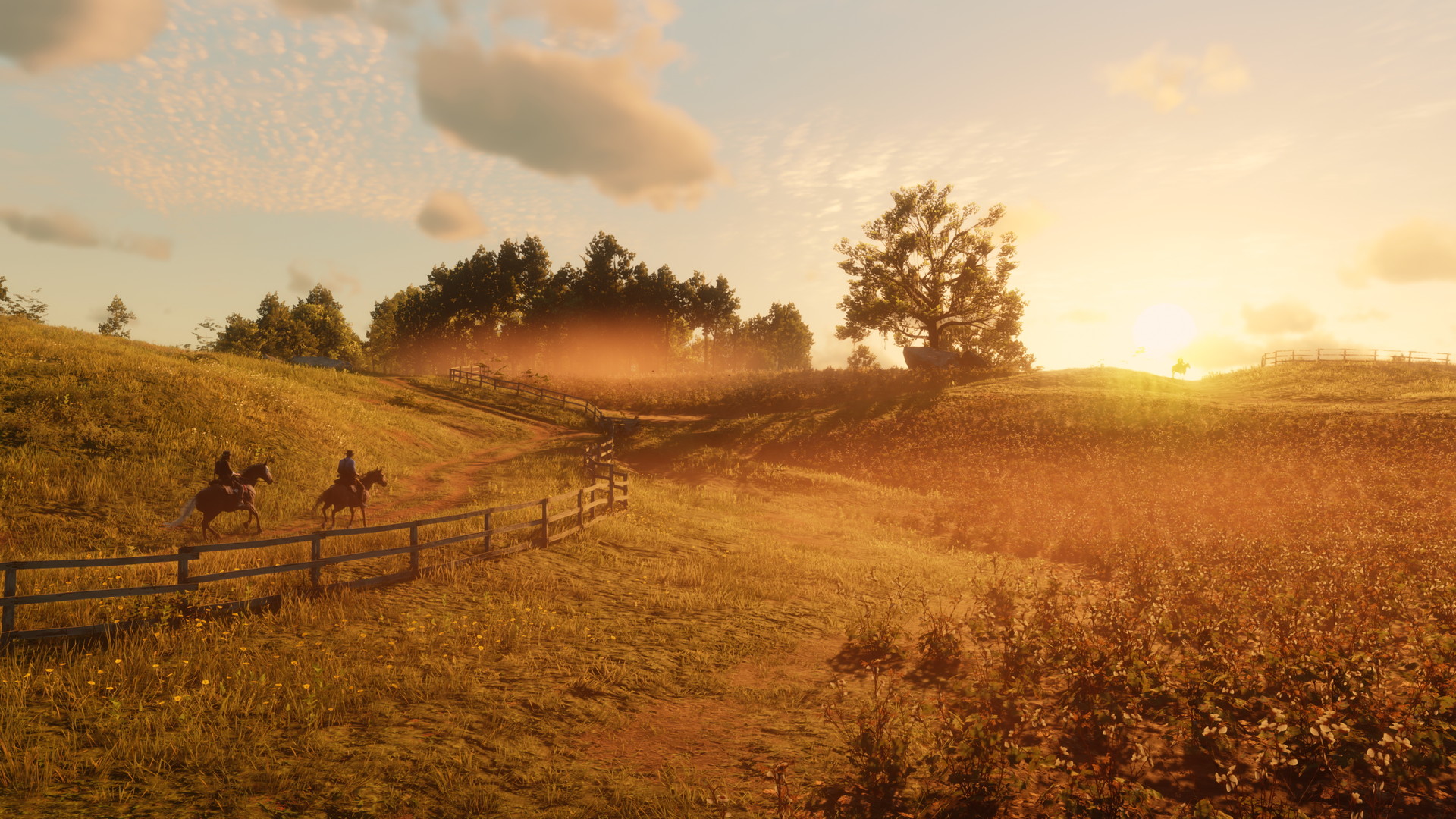
Red Dead Redemption 2 asks for your patience and repays it like few games ever have. This is a western about the end of an era, told through the slow disintegration of one outlaw gang — and it is Rockstar's most human work.
Released on PlayStation 4 and Xbox One in October 2018 and on PC in November 2019, it is a prequel to 2010's Red Dead Redemption, set in 1899 as lawmen, railroads and industry close in on the last of the outlaws. At its centre is Arthur Morgan, enforcer for Dutch van der Linde's gang, and Rockstar Games builds an entire country around his fall.
A world that breathes
The detail is almost absurd: mud cakes to your horse, NPCs remember if you robbed them, a stranger you helped will buy you a drink three towns over. Nothing is there just for show; every system feeds the fantasy of living as an outlaw in 1899. It is the most convincing open world anyone has built.
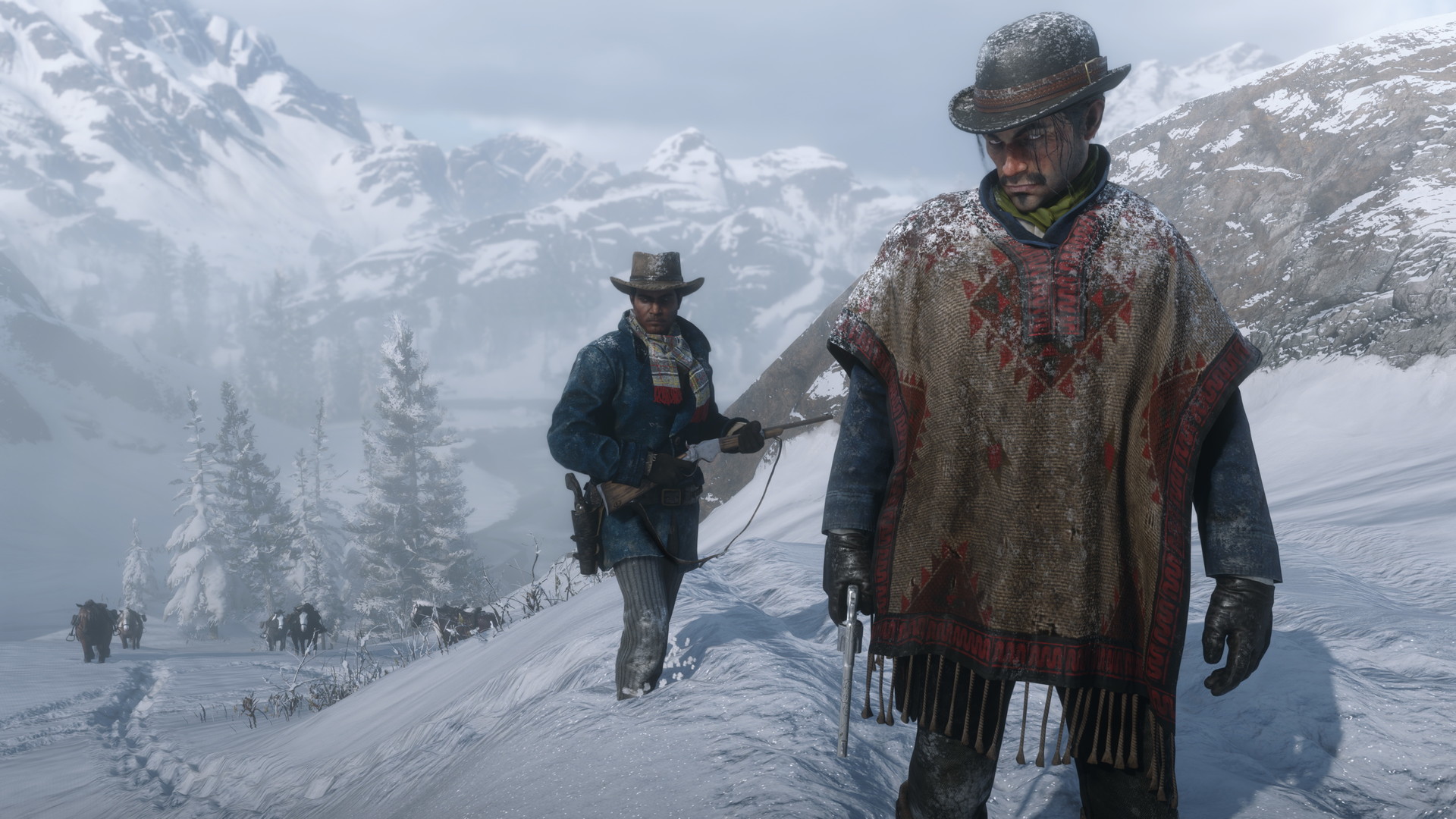
The map spans five fictional states, each with its own temperament. Ambarino is snowbound mountain wilderness; New Hanover stretches from the cattle town of Valentine to the coal town of Annesburg; Lemoyne sinks into bayou and plantation country around Saint Denis, New Orleans in all but name. West Elizabeth and the desert of New Austin return from the first game, redrawn for the earlier era — Blackwater still under construction, Armadillo hollowed out by cholera. Ambushes, pleas for help, public executions and hunting that cares which weapon you used and where the shot landed keep the miles between missions alive.
Arthur Morgan's story
What elevates it is Arthur. His arc — from gang enforcer to a man reckoning with his choices — is written and performed with a restraint big-budget games rarely attempt. By the final act the game has quietly become a meditation on loyalty and mortality.
Roger Clark's performance carries much of that weight, and the supporting cast is just as carefully drawn: Dutch sliding from charismatic idealist to paranoid tyrant, Hosea's weary decency, John Marston still finding out what kind of man he wants to be. The gang's camp is where the writing really lives. It moves as the story moves, and its residents carry the same moods from cutscene into gameplay, so the family feels real long before it starts to come apart. The epilogue is long and the opening hours are slow, but both earn their place by the time the credits roll.
Guns, horses and honour
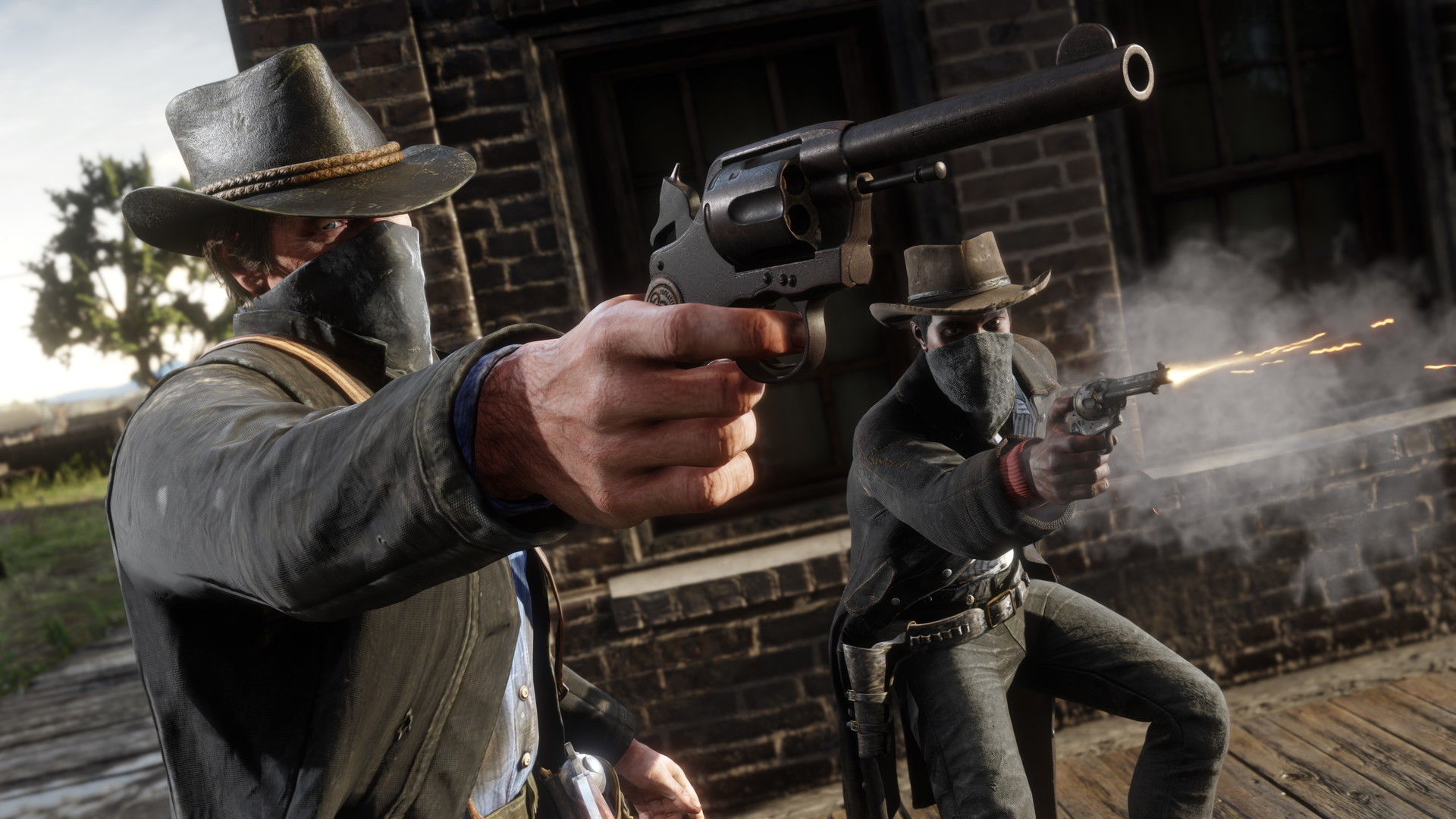
Moment to moment, this is a slower game than Rockstar's crime sagas. Gunfights lean on cover and Dead Eye, which slows time so you can mark targets before Arthur fires on every one of them. Guns need cleaning, and the more you use a weapon type the better Arthur handles it. Horses are companions as much as transport: lead, brush and feed one and the bond grows, along with how well it performs under you.
Layered on top is the Honor system. Helping strangers or sparing a beaten opponent in a duel raises it; theft and cruelty drag it down, and the difference shows up in dialogue, rewards and some of the story's outcomes. Crimes draw witnesses, bounties and eventually bounty hunters. Then there is the friction — health and stamina cores to maintain, weight gained or lost depending on what Arthur eats, hair that grows out over weeks. Some players will call it busywork. We call it texture, even if the controls are heavy and the inventory wheel is slower than it has any right to be.
Presentation and performance
Nearly eight years on, it remains one of the best-looking games ever made. The lighting and dynamic weather do much of the work — fog lifting off a river at dawn, storm light turning the plains bronze — and Woody Jackson's score shifts with what you are doing, from quiet roaming to sudden violence, while original songs produced by Daniel Lanois land at exactly the right moments. The PC version added visual and technical improvements and is the one to play if your hardware is up to it. Everywhere, though, Arthur's weighty, fully animated movement means he never snaps into action the way a lighter hero would. That is deliberate, and it is also the game's most divisive trait.
What's changed since launch
The single-player campaign is essentially the game it was in 2018. The additions came elsewhere: the PC release on November 5, 2019, and Red Dead Online, which opened as a public beta in November 2018, grew through free title updates and was sold as a standalone client from December 1, 2020. In July 2022 Rockstar said the online mode would no longer receive major updates as development resources moved to Grand Theft Auto VI, so treat it as a bonus rather than a reason to buy.
Red Dead Redemption 2 is now available for PlayStation 4 and Xbox One systems rsg.ms/1953dce #RDR2
— Rockstar Games (@RockstarGames) October 26, 2018
Official resources
- Red Dead Redemption 2 official site
- Rockstar Newswire
- Red Dead Redemption 2 on Steam
- Red Dead Redemption 2 on PlayStation
- Red Dead Redemption 2 on Xbox
- Red Dead Redemption 2 on Wikipedia
The verdict
If you want a story you will still be thinking about years later, and a world you are happy to simply ride through at sunset, this is essential. If you want brisk missions, snappy shooting and a map full of icons to clear, the unhurried rhythm will wear on you well before the halfway mark. It carries an M rating from the ESRB and PEGI 18 in Europe for good reason: the violence is frequent and unflinching.
The deliberate pace and heavy controls won't suit everyone, and the menus fight you. But for sheer craft and storytelling ambition, nothing in the open-world space touches it — not even Rockstar's own Grand Theft Auto V.
What we loved
- Unmatched world detail and atmosphere
- Arthur Morgan is one of gaming's great protagonists
- A story with real emotional weight
- Every system reinforces the fantasy
What held it back
- Deliberate pacing tests patience
- Controls can feel heavy and over-animated
- Menu and inventory friction